Paint by Numbers Guides

A Creovia beginner guide
How to Avoid Smudging Paint by Numbers While Painting
Reduce accidental smudges by choosing a comfortable direction, keeping the active area small, and checking the canvas before moving your hand.
Smudges often happen when a hand, sleeve, tool, or paper touches an area that is still wet. They can also happen when a painter reaches across a section without noticing where the brush has just been. You cannot prevent every mark, but planning around hand position and working order can reduce unnecessary contact with fresh paint.

Choose a direction that keeps your hand off fresh paint
Smudges often happen when a hand, sleeve, tool, or paper touches an area that is still wet. They can also happen when a painter reaches across a section without noticing where the brush has just been. You cannot prevent every mark, but planning around hand position and working order can reduce unnecessary contact with fresh paint.
Before you begin, look at the canvas and decide where your wrist and forearm will rest. Many right-handed painters find it easier to progress from the upper-left area toward the right and downward; left-handed painters may prefer a path from the upper-right toward the left. These are starting points, not rules. The best direction is the one that lets you reach the next section without laying your hand across a wet area.
If the design has a large region in one corner, adjust the path as you go. Keep the canvas oriented so the current area is easy to reach, and rotate it only if the kit’s materials and setup allow. A tabletop easel can change your wrist angle, but it does not remove the need to avoid fresh paint. Check the easel’s instructions and keep the canvas secure before changing its position.
Work in a small, reachable area
Instead of filling a broad region all at once, choose a cluster of sections that you can reach without stretching across the canvas. Finish the marks that fit comfortably in that space, then pause and reposition. This limits the amount of fresh paint near your hand and makes it easier to see which parts are still wet.
Keep the color key and pot beside the active area, not on top of the canvas. Set the brush down in a designated rest spot between strokes. If you need to move a supply, lift it clear rather than sliding it across the work surface. These small changes are especially useful when the table is narrow or when the canvas extends beyond your comfortable reach.
Notice whether you naturally rest a palm or wrist on the canvas. If so, place a clean scrap of paper beneath your hand only on an area that is dry and stable, or change your position so your hand stays outside the painted sections. Do not put a cover or paper on fresh paint just to create a rest point.
Make color changes without crossing the canvas
Plan where the next paint pot will sit before loading the brush. Return it to the same side or tray after use, and avoid placing several open pots around the canvas. A consistent setup reduces searching and prevents an arm from sweeping over painted areas while you look for a color.
When working color by color, consider which sections are accessible from your current position. You do not need to follow one universal order; choose a sequence that preserves a clear path for your hand. If the next area is across a wet section, paint another accessible section first or wait until the surface is ready to touch according to the product directions. Do not rely on a guessed drying time, because conditions and materials can vary.
If you are moving between adjacent colors, finish one section cleanly and place the brush down before reaching for another pot. Keep the labels visible so you do not need to lean over the canvas to check them. A small palette or holder may help organize supplies, but do not assume an accessory is included unless the selected product listing says so.
Keep sleeves, paper, and reference sheets clear
Roll up loose sleeves and move paper towels, phones, and drink containers outside the canvas area. If you use a reference sheet, place it beside the canvas where it will not fall onto the painting. A clean, uncluttered workspace helps you notice wet areas and gives your hand somewhere safe to move between strokes.
Take a short pause if you are tired or beginning to reach awkwardly. It is better to stop and protect the work than to stretch across a section just to finish one more mark. Close paints and clean or rest the brush according to the kit instructions before stepping away. Keep the cover or storage materials clear of paint until the surface is ready for them.
Before resuming, look over the canvas under good light. This quick scan shows which areas are still wet and where you can safely continue. If you cannot tell whether a section is ready, follow the product directions and avoid testing by touching the painted surface.
If a smudge happens
Stop brushing the area immediately. Check the paint and canvas instructions before trying to wipe, lift, or repaint it; rubbing wet paint can spread the mark or disturb the printed surface. If the paint is still wet, use only a method the product directions recommend. If it has dried, assess the mark in good light and decide whether a small correction with the assigned color is appropriate.
For guidance on correcting an already painted area, read paint by numbers first-session guide. The paint by numbers first-session guide covers control around smaller sections. Browse the current paint by numbers kits and follow the care guidance on the specific listing and kit materials.

Frequently asked questions
How do I stop my hand from smudging wet paint?
Plan a reachable path, keep the active area small, and avoid resting your hand across freshly painted sections. Reposition the canvas when it can be done safely.
Which direction should I paint a paint by numbers canvas?
Choose a direction that keeps your wrist and sleeve away from wet areas. Right- and left-handed painters may prefer different paths, so adjust to your reach and the canvas layout.
How long should I wait before touching a painted section?
Follow the product’s directions rather than relying on a fixed time. Drying can vary with the materials and working conditions; avoid touching the surface to test it.
Can I use a paper towel to wipe a smudge?
Check the kit instructions before wiping. Rubbing wet paint can spread it or affect the canvas, so do not assume a dry or damp towel is suitable.
What should I do if paint has transferred to my hand?
Stop before touching another area, clean your hand according to the paint directions, and check the canvas for any contact mark. Resume only when your hands and work area are clear.
Find your next project
Explore paint by numbers kits.

Custom Paint by Numbers Kit From Your Photo
$34.99

Snowy Pink and Green European Christmas Street Paint by Numbers Kit
$29.99

Snowy Pink Alpine Village Christmas Tree Paint by Numbers Kit
$29.99

Snowy Gothic Church with Stained Glass Christmas Paint by Numbers Kit
$29.99
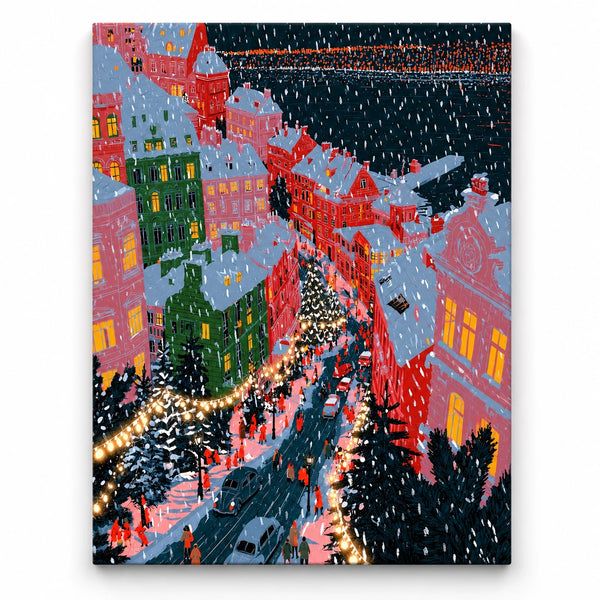
Snowy Christmas Town Square with String Lights Paint by Numbers Kit
$29.99

Snowy Christmas Balcony with Red Bow Tree Paint by Numbers Kit
$29.99

Snowy Alpine Village Christmas Street with Red Car Paint by Numbers Kit
$29.99