Diamond Painting Guides

A Creovia beginner guide
How to Work Water Reflections in Diamond Painting
Follow water reflections across your diamond painting chart, organize similar shades, and check highlights and section boundaries.
To work water reflections in diamond painting, follow the printed symbols through the water one small section at a time. Look at where the reflection sits in the overall picture, but use the chart—not the neighboring drill or the product image—to choose each color. Small changes in shade may be part of the design.

Find the reflection before you start
Look at the reference artwork and identify the shoreline, the water, and any reflected buildings, sky, or lights. Reflections may appear as short broken marks, soft color patches, or longer streaks. They do not have to form a perfect mirror image. This overview is useful for understanding the scene, but the printed chart controls where each drill goes.
Keep the canvas key nearby. Water can use several similar blues, greens, pinks, or pale highlights. Match each symbol to its key row and the labeled packet before you place it; color on a screen or printed picture is not a reliable replacement for the code.
Work across the water in manageable sections
- Choose a starting edge. Pick a small part of the water near the shoreline or one side of the canvas. Expose only the section you can work on and keep the rest protected according to the kit instructions.
- Read the first symbol. Trace it to the key, then check the packet or container label. Pour a small working amount into a tray and close the source container.
- Place the nearby matches. Fill the same symbol within the exposed area, including isolated cells. Avoid extending a line of one color into neighboring cells without checking their symbols.
- Change colors carefully. Return unused drills to their identified container before opening a similar shade. A single placer can help when colors change in short runs.
- Check the boundary. Before moving the cover, inspect the edge of the completed section for unfilled symbols. In the next section, use the chart again to continue the reflection; do not assume the last drill determines the next color.
The color-blocking and confetti guide offers a wider workflow for areas with long runs or frequent color changes. For a reflection, the same canvas may contain both.
Keep highlights distinct from glare
A pale mark in water may represent a highlight, but an empty-looking cell still needs the drill specified by the chart. Inspect the printed symbol before choosing a packet. If the protective film or placed drills reflect your lamp, move the light or adjust your viewing angle so you can read the canvas more comfortably.
If two marks look similar, compare the entire symbol with the key in better light. A magnifier may help when the print is small; it cannot restore a missing mark. Keep an unresolved area covered and contact the seller if you cannot identify it confidently.
See how a river fits into a full design
The Cosmic Candy River Landscape Diamond Painting Kit features a winding stream through a colorful fantasy landscape with trees and a cottage. Its artwork gives you an example of water sharing the picture with many other details. Follow the actual printed canvas for the water's colors and placement.

The current listing offers 30 × 30, 40 × 40, and 50 × 50 cm canvases, round or square drills, and no-frame or framed options. For the framed option, the frame and unmounted canvas ship separately for assembly after completion. Review the available options and artwork before choosing a size; the product image does not guarantee the precise appearance of each finished detail.
Review the scene from a normal viewing distance
Once the water section is filled, step back to see how its colors relate to the shoreline and the rest of the image. Individual drills can look more segmented close up. If a particular area still looks unexpected, compare its symbols, key entries, and packet labels before making corrections. A clearly misplaced drill can be corrected carefully following the kit instructions; avoid rearranging an entire reflection based on the reference picture alone.
For the fundamentals of matching canvas, key, and packet, read how to read a diamond painting chart. If you are still choosing a scene, the river diamond painting guide compares different compositions.
Frequently asked questions
Should water reflections be symmetrical in a diamond painting?
Not necessarily. Follow the chart for each cell; the design may show broken light and colors instead of a perfect mirror image.
Can I replace a water color with a similar-looking drill?
Use the symbol and kit key to identify the specified drill. If the label or symbol is unclear, protect the area and ask the seller before substituting a color.
How do I keep a reflection continuous across sections?
Check the chart at the edge of each finished section before exposing the next. Continue matching each symbol to the key rather than extending a line based only on the last placed drills.
Why does the water look different close up?
A diamond painting is made of individual colored drills, so close-up placement can appear more segmented than the image seen from a normal viewing distance. Lighting also changes the sparkle you see.
Explore this topic
A kit to explore
Compare the current artwork and options on each product page before choosing.

Cosmic Candy River Landscape Diamond Painting Kit
$25.99
Bring the Cosmic Candy River Landscape design to life with this diamond painting kit. The square canvas is available in 30 × 30 cm, 40 × 40 cm, 50 ×...
Find your next project
Explore diamond painting kits.

Colorful Village Street Diamond Painting Kit
$23.99
Tropical Hibiscus Queen Diamond Painting Kit
$23.99

Santa Hug Reindeer Diamond Painting Kit Christmas
$23.99
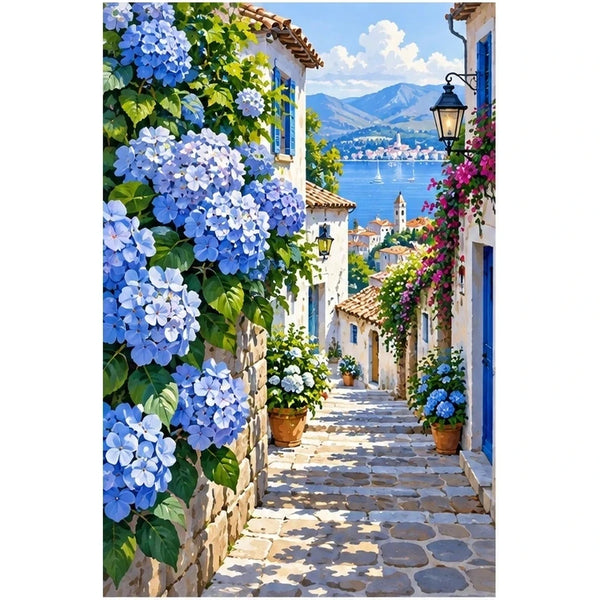
Blue Hydrangea Village Diamond Painting Kit
$23.99

Tropical Macaw Hibiscus Diamond Painting Kit
$23.99

Santorini Sunset Village Diamond Painting Kit
$23.99
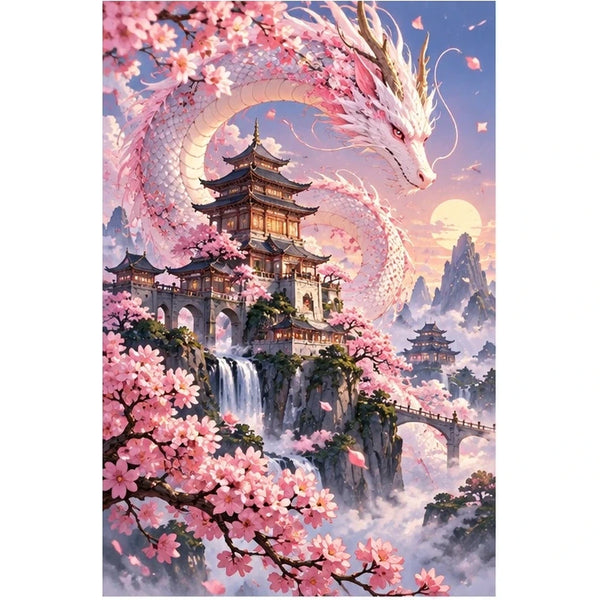
Pink Dragon Cherry Blossom Pagoda Diamond Painting Kit
$23.99