Diamond Painting Guides
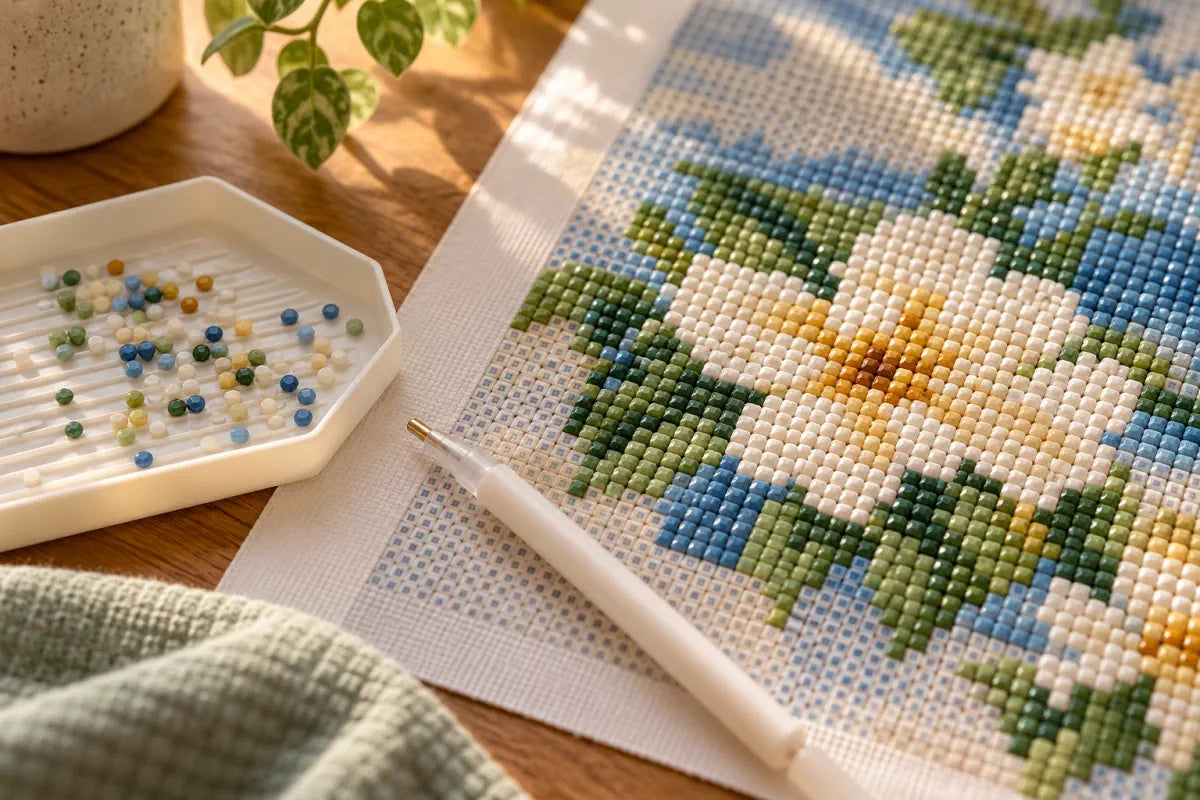
A Creovia beginner guide
Why Do Diamond Painting Drills Click? A Guide to the Sound
Understand possible sources of diamond painting clicks, why sound varies, and when a loose drill calls for troubleshooting.
Why Do Diamond Painting Drills Click? A Guide to the Sound
A small click or pop can happen while placing diamond painting drills, but it is not a standard feature of every kit. The sound may come from the way a drill, applicator, canvas, or nearby drills meet; tray movement and the material in a pen can add other small noises. Crafters describe different experiences, so one quiet session does not mean your kit is faulty, and a loud clip does not set a sound target for your own project.
This guide focuses on sounds during ordinary placement. It is separate from a drill that actually lifts or falls off the canvas, which is a placement or adhesion question, and from tips for filming an ASMR video. A click by itself is not a diagnostic test or a measure of quality.
What might make a small click?
When you place one drill, several surfaces can come close together: the applicator tip and drill, the drill and adhesive canvas, or the new drill and those already in the row. A tiny contact sound may be audible in one setup and barely noticeable in another. The exact source is not always possible to identify from sound alone.
The applicator can change what you hear too. Some makers use wax, others use putty, and pens have different tips. Drills sliding in a tray or a container lid moving can create separate sounds that blend into a short video. Treat these as possible contributors rather than a single explanation that applies to every kit.
In a recent diamond painting community discussion about placement sounds, some makers say they enjoy occasional clicks, while others describe a quieter or different rhythm. The thread is personal experience, not a controlled comparison, but it is a useful reminder that sound preferences and results vary.
Drill shape may change the experience, but it does not predict it
Round and square drills have different outlines, and square drills sit beside one another in a different pattern than round drills. That geometry could affect the small contacts you notice as a section fills in, but it does not mean square drills always click or round drills stay silent. The pen, tray, surface, placement, and recording conditions can all influence what reaches your ears.
If you are new to the terms, read the round-versus-square drill guide for a visual and practical comparison. Choose a shape based on the listed options and the finished-work examples you prefer, not on a promise of a particular sound.

Editorial illustration of the two drill shapes; sound can still vary from one setup to another.
Why videos can sound different from your table
A close microphone can pick up taps and tray sounds that are easy to miss while you are concentrating on placement. A creator may also choose a quiet room, move the microphone close to the canvas, or edit the recording. A video is therefore an example of one setup, not a promise that your kit will sound the same.
“ASMR” is often used as a label for no-talking, close-up craft videos with repeated sounds or movements. Viewers respond differently: some enjoy the rhythm, and others prefer music, narration, or no audio. The label describes a content style and a personal preference; it does not mean a kit includes a sound effect or that every viewer will have the same response.
If you want a calm session, keep the routine simple. Set the tray on a stable surface, pour only a small working amount, and keep containers from rolling around. If tray rattling distracts you, try placing it on a nonslip cloth and compare. These are comfort adjustments, not a way to force a click.

A steady workspace can help keep incidental tray and container noises from interrupting your session.
Place drills for fit, not for sound
Do not press harder just to make drills click. A sound is not proof that a drill is fully seated, and the absence of a sound is not proof that it is loose. Follow the kit’s instructions, align the drill with its printed space, and use the pressure that feels controlled for the tool and canvas.
Listen for the difference between a brief contact sound during placement and an actual drill that shifts, lifts, or falls away afterward. If drills are coming loose, inspect the area and follow a troubleshooting guide such as Why Do Diamond Painting Drills Pop Off?. Do not diagnose an adhesive problem from a single click, and do not use a roller or extra pressure solely to create an audio effect.
For the placement basics, see the diamond painting beginner’s guide. If you are still deciding which design to work on, the Diamond Painting collection lets you compare current artwork and listed formats.
A simple way to think about the sound
Use sound as a small part of the experience, not as a performance goal. A click can be enjoyable, neutral, or distracting depending on the person and the session. If you want to explore it, notice whether the noise seems to come from placement, the pen, or tray handling, then change only one part of your setup at a time. If sound does not matter to you, there is no need to adjust your tools around it.
The same project can feel different from a close-up recording, a quiet room, or a shared workspace. Let the canvas and instructions guide placement. If the drills sit where they should and stay in place, the sound itself does not need to meet a particular standard.
Frequently asked questions
Why do diamond painting drills make a clicking sound?
A click may come from contact between a drill, applicator, canvas, or nearby drills. Tray movement or pen filler may add other small sounds. There is no single sound every kit makes, so treat this as a possible explanation rather than a test.
Do square diamond painting drills click more than round drills?
Not consistently. Their different outlines can change how they meet neighboring drills, but the tool, surface, placement, and recording conditions also matter. Drill shape alone does not guarantee a louder click.
Should I press harder to make diamond painting drills click?
No. A click is not a placement requirement or proof of adhesion. Follow the kit instructions and aim for controlled alignment; do not change your pressure just to produce a sound.
What if a drill pops and then comes loose?
A sound by itself may not signal a problem. If a drill actually shifts, lifts, or falls off, check the placement and follow a troubleshooting guide for drills that pop off the canvas.
Can a diamond painting kit promise ASMR clicking sounds?
No. A kit listing does not establish a particular sound outcome. Sounds vary by setup and placement, while ASMR is a video style and a personal viewer preference rather than a required kit feature.
Find your next project
Explore diamond painting kits.

Colorful Village Street Diamond Painting Kit
$23.99

Santa Hug Reindeer Diamond Painting Kit Christmas
$23.99

Tropical Hibiscus Queen Diamond Painting Kit
$23.99

Tropical Macaw Hibiscus Diamond Painting Kit
$23.99
Pink Dragon Cherry Blossom Pagoda Diamond Painting Kit
$23.99

Blue Hydrangea Village Diamond Painting Kit
$23.99
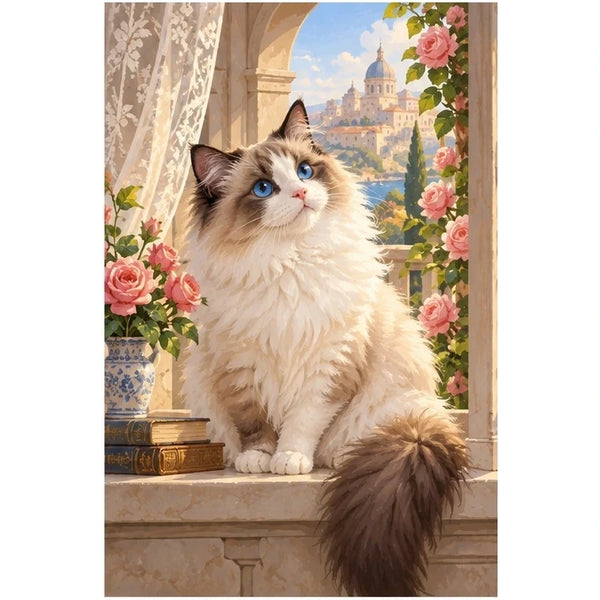
Ragdoll Cat Rose Window Diamond Painting Kit
$23.99