
Paint by Numbers Guides

A Creovia beginner guide
Bird Paint by Numbers: Choose a Portrait, a Still Life, or a Coastal Scene
Look beyond the bird species: a close floral portrait, a small songbird by a window, and gulls above a wave offer very different pictures to paint.
For a bird paint by numbers kit, compare how much of the picture belongs to the bird and how much belongs to its surroundings. A close pair of birds gives you prominent faces and feather shapes. A songbird in a room makes the furnishings part of the project. Gulls over a wave shift much of the attention to sky, water, and movement.
All three can appeal to someone who likes birds, but they are not interchangeable painting projects. Before choosing, look at the whole canvas and ask which parts you would enjoy painting after the bird itself is finished.
The background is part of the purchase
It is easy to choose from a thumbnail because the animal looks appealing. Enlarge the image and divide it mentally into three areas: the bird, nearby objects, and the distant setting. You do not need exact percentages. You are checking whether your favorite part occupies most of the design or only a small corner.
This matters when choosing a gift, too. A person who enjoys coastal interiors might prefer a wave scene with gulls; someone who likes colorful animal portraits may want a much closer view. Neither choice requires a claim about which kit is easier or more popular.
| Composition | What leads the picture | What else you will paint |
|---|---|---|
| Close floral portrait | Large birds and their faces | Flowers, leaves, and nearby background colors |
| Window still life | The arrangement of bird and household objects | Window light, books, flowers, and furnishings |
| Coastal scene | Flying birds and the sweep of a wave | Sky, water, foam, and distant color changes |
A closer look at three Creovia designs
Lovebirds Among Flowers: choose the interaction
In Lovebirds Among Flowers, two orange-and-yellow birds face one another at close range. Their heads and beaks form a clear central interaction, with pink flowers and green foliage around them.
The appeal is the pair, rather than a distant habitat. Look at the relationship between the two faces: if that is the part you want to keep looking at, this composition puts it near the center of the experience. The surrounding flowers introduce different shapes from the feathers and help frame the birds.
Inspect the eye, beak, feather, and petal areas in the product image. A large subject can still contain small sections. Do not infer that a close portrait needs only broad brushstrokes, and do not assume the pictured bird colors establish a scientifically accurate species identification.
Songbird Sunny Window: choose a room with a small visitor
Songbird Sunny Window places a small orange-breasted bird beside an open book. A blue cup, flowers, and a bright window help build the room around it. The bird is one part of a larger still-life arrangement.
This is a useful contrast with the lovebirds portrait. You would be choosing to paint objects and window light as well as an animal. If books, flowers, and a sunny interior are what attract you, the smaller bird may be exactly the right proportion.
Look for the largest shapes first, then the small points of interest. A cup or window area may be divided into several printed colors; the finished image alone does not show every numbered section. Use it to judge whether you like the overall subject matter, then consult the listing images and kit details for the format.
See the songbird window kit options

Seagulls Ocean Wave: choose the movement around the birds
In Seagulls Ocean Wave, flying gulls occupy the sky above a large breaking wave. The composition draws attention through the birds' wings and the curve of the water rather than toward a single close face.
Choose it if painting a coastal scene is part of the attraction. The blue and lavender areas, pale birds, and white foam belong together; removing the gulls would still leave a substantial seascape. That is a different balance from a portrait where the animal fills the canvas.
Check the foam before treating this as a project made mainly of large blue areas. The visible wave contains many light patches and changing shapes. A limited-looking palette is not proof of a short completion time. Our landscape selection guide offers more ways to compare scenery and detail.
Choose the work you want to spend time on
Once you have a favorite image, name three parts you expect to paint: perhaps feather edges, flower petals, and foliage, or wings, sky, and foam. If two of those parts do not interest you, return to the other compositions before ordering.
For detailed areas, plan for a supported canvas and a comfortable view of the printed sections. Use the supplied color key rather than choosing colors from memory. A bird's pale cheek or a white wave may need different numbered paints even when those areas look similar from a distance.
Do not enlarge the supplied brushwork beyond the intended boundary just to make the project move faster. Pick a brush that fits the section and work in manageable amounts. The guide to small-detail brush control covers that task without requiring you to choose a particular bird design.

Check the options after you choose the picture
The three listings discussed here currently describe a 40 × 50 cm linen canvas with premixed acrylic paints and choices of 24, 36, or 48 colors. They also offer No Frame, DIY Frame, and Framed formats. Check the selected variant on the product page because its color count and support are separate choices.
No Frame is the rolled-canvas option. DIY Frame includes wooden rails for assembly, while Framed is described as hand-stretched. None of these names means the picture arrives already painted. If you are choosing a gift, consider whether the recipient wants to assemble a support or begin with a stretched canvas.
More colors should not be used as a blanket promise of a better result or an easier process. Consider whether you want to manage a larger set of paints, and confirm what the chosen option includes. Our color-count guide explains the decision in more detail.
Make a choice you can explain without a ranking
A useful final answer sounds specific: “I want the close pair because their faces are the main subject,” or “I want the wave because I enjoy painting water as much as birds.” That is more informative than picking whichever design happens to be labeled best somewhere else.
Recheck the product name and selected format before adding the kit to your cart. The conceptual illustrations in this guide explain composition; use the linked product images to confirm the exact artwork you are buying.
Frequently asked questions
Which bird paint by numbers kit puts the birds at the center of the picture?
Of the three examples here, Lovebirds Among Flowers gives the birds the largest, closest presence. Songbird Sunny Window places a smaller bird within an interior, while Seagulls Ocean Wave includes birds as part of a coastal scene.
Is a bird portrait easier than a bird landscape paint by numbers kit?
Not necessarily. A close portrait may contain small feather and facial sections, while a landscape can include detailed foam or foliage. Compare the actual numbered layout when available instead of judging difficulty by subject size alone.
What size are the three bird paint by numbers kits in this guide?
The checked listings describe 40 × 50 cm linen canvases. Confirm the dimensions and selected format on the current product page before ordering.
Do these bird kits use acrylic paint or watercolors?
The listings specify premixed acrylic paints. A soft or light appearance in the artwork does not mean the kit contains watercolor paints.
Which frame option should I choose for a bird paint by numbers gift?
Choose according to the recipient's setup. No Frame is a rolled canvas, DIY Frame includes rails to assemble, and Framed is described as hand-stretched. Check the listing contents and remember that all are kits to paint, not finished paintings.
Explore this topic
Explore related kits
Compare the current artwork and options on each product page before choosing.


Find your next project
Explore paint by numbers kits.
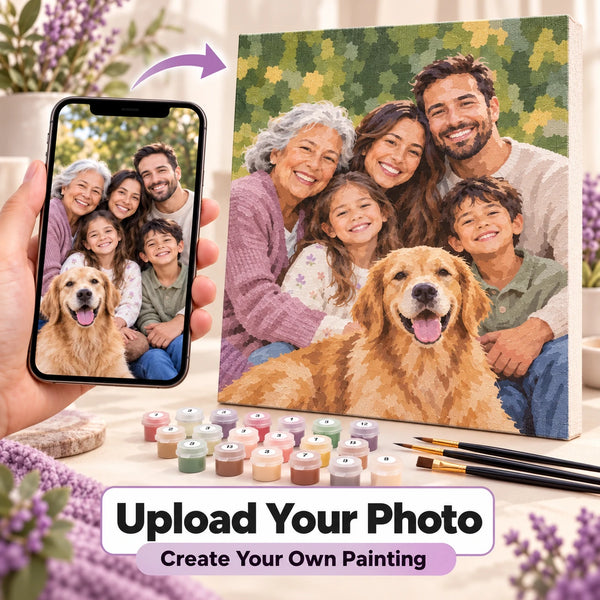
Custom Paint by Numbers Kit From Your Photo
$34.99

Moonlit Ocean Serenity Paint by Numbers Kit
$29.99

Herb Bundles in a Spell Kitchen Paint by Numbers Kit
$29.99

Chalk Cliffs Sea Grass Paint by Numbers Kit
$29.99

Woman With Teacup And Flowers Paint by Numbers Kit
$29.99

Yellow Mimosa In Blue Vase Paint by Numbers Kit
$29.99

Yellow Sunflowers And Daisies Paint by Numbers Kit
$29.99

