Diamond Painting Guides

A Creovia beginner guide
Left-Handed Diamond Painting: Set Up Your Workspace
Arrange the tray, light, canvas, and supplies for a comfortable left-handed diamond painting workspace.
A left-handed diamond painting setup starts with three adjustments: try the drill tray on your left, position a lamp on your right, and turn the canvas so your working hand can reach the active section without crossing exposed adhesive. Test the arrangement with a few drills and move anything that feels awkward.

Place the tray where your left hand can reach it
Put the tray to the left of the working area, on a stable surface. Keep enough room for the pen to move between tray and canvas without passing over open containers. If the canvas extends beyond the desk, support it before placing the tray; do not put a tray where a sleeve or elbow can knock it over.
Keep only the active color open. Once that section is finished, return unused drills to their labeled container before opening the next color. If a left-side tray conflicts with the canvas edge, move it slightly below the canvas or turn the work surface until the reach feels comfortable.
Use light from the opposite side
Start with a lamp on the right so the left hand is less likely to shade the symbols. This is a starting position, not a rule: move the lamp or canvas until you can read the chart without a bright reflection. The lighting guide explains how to adjust glare.
A light pad is optional. If you use one, check where its power cable and controls sit before placing the canvas. Route the cable away from your wrist, tray, and the desk edge; adjust brightness and keep liquids away from the connection. Creovia's adjustable LED light pad offers A5, A4, and A3 sizes and three brightness levels; choose based on the space you need to illuminate.
Turn the canvas, not your wrist
Try turning the canvas so the section you are filling is close to your left hand. It does not need to stay upright while you work, as long as you can correctly read its symbols and color key. Keep unfinished adhesive covered and do not rest your hand on exposed glue. For narrow or directional symbols, double-check the key after rotating the canvas.
Some people work from the right side toward the left; others prefer another route. Choose a section that keeps your hand off the uncovered area and avoids dragging your sleeve across finished drills. Adjust again as the project grows. The pen grip guide covers ways to hold the tool comfortably.
Keep colors and tools within reach
Set the color key where you can see it without reaching over an open tray. Place closed drill containers on the side or behind the canvas, leaving a clear route for your left hand. The diamond painting storage organizer has labeled containers and a tool pocket; select a capacity that fits your project, then close each container before moving the case.
Keep the workspace stable and adapt it to your own reach. A tray on the left and lamp on the right can be useful starting points, but a setup is successful when you can see the symbols, reach your drills, and protect the canvas.

Frequently asked questions
Do left-handed people need a special diamond painting pen?
Not necessarily. A pen that fits your grip and compatible tips can work in either hand. Choose a comfortable tool rather than assuming a special pen is required.
Where should a left-handed person put the drill tray?
Try placing the tray to the left of the active canvas area, within easy reach. Adjust its position if your arm crosses the adhesive or blocks your view.
Where should the lamp go?
Try the lamp on your right so your left hand is less likely to cast a shadow. Adjust the angle to reduce glare and suit the surface.
Which corner should a left-handed person start in?
There is no required corner. Begin where your left hand can reach the working section without resting on exposed adhesive or finished drills.
Explore this topic
Explore related kits
Compare the current artwork and options on each product page before choosing.


Find your next project
Explore diamond painting kits.

Colorful Village Street Diamond Painting Kit
$23.99
Tropical Hibiscus Queen Diamond Painting Kit
$23.99

Kit de pintura de diamantes Cabaña navideña acogedora
$23.99
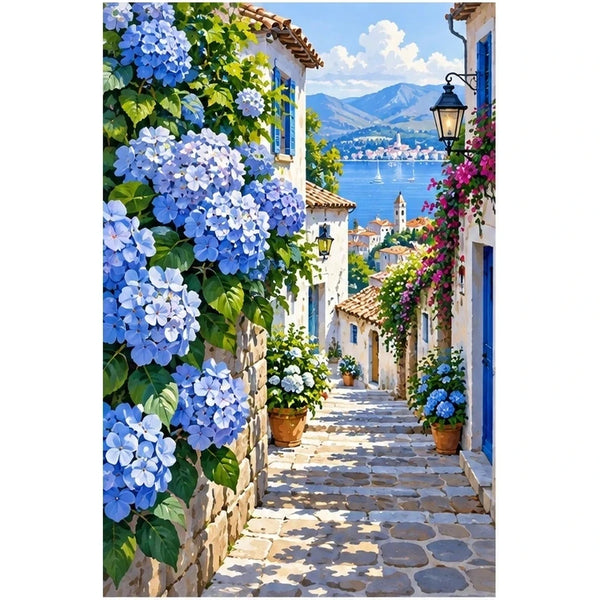
Blue Hydrangea Village Diamond Painting Kit
$23.99

Tropical Macaw Hibiscus Diamond Painting Kit
$23.99

Santorini Sunset Village Diamond Painting Kit
$23.99
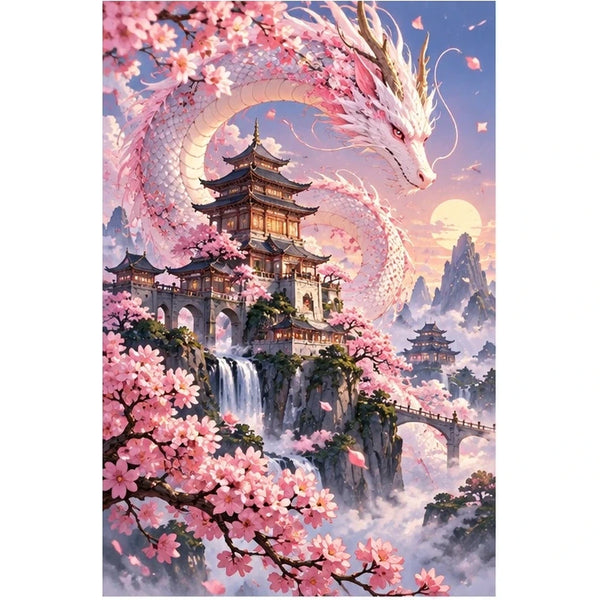
Pink Dragon Cherry Blossom Pagoda Diamond Painting Kit
$23.99