
Paint by Numbers Guides
A Creovia beginner guide
Should You Paint the Background First in Paint by Numbers?
Compare background-first and subject-first paint by numbers workflows, then choose an order that fits your numbered canvas and workspace.
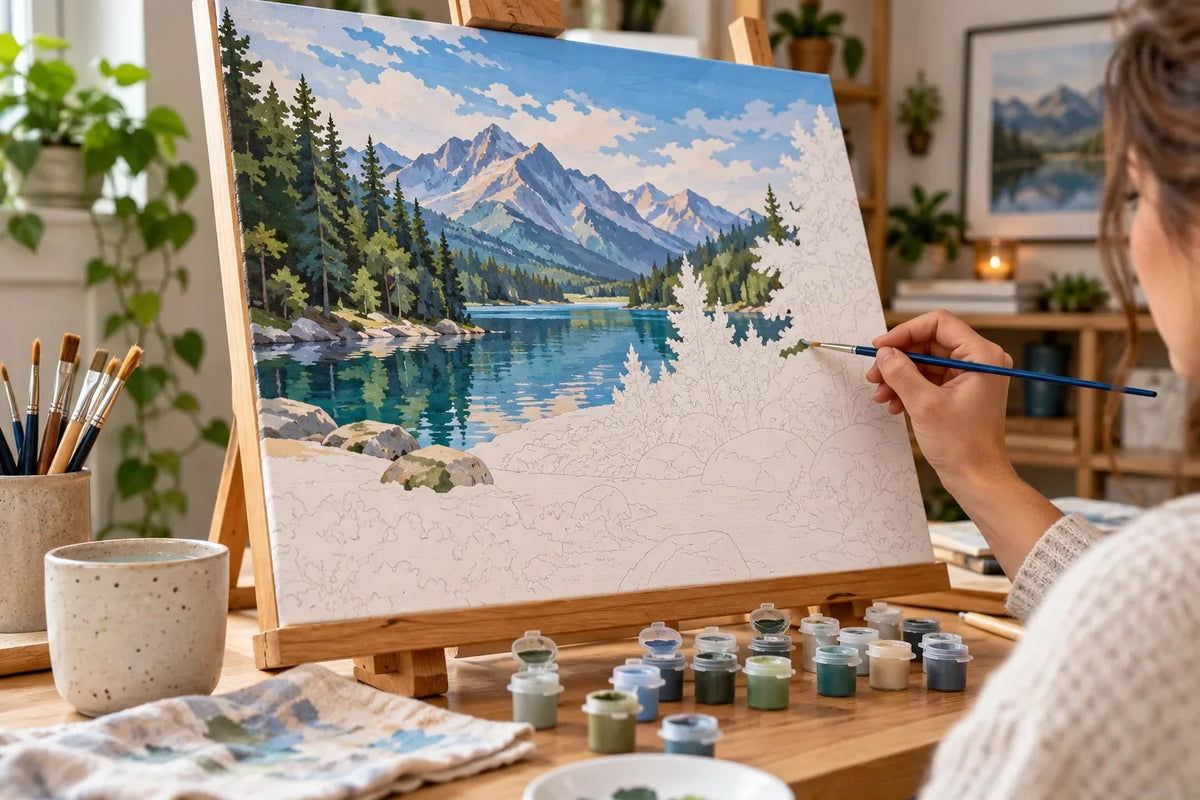
There is no single correct order for every paint by numbers canvas. Painting the background first can make a broad area easier to complete in one pass, while working from a focal point outward can help you keep the main subject in view. The numbered outlines and the paint key remain the guide; choose an order that keeps the next section easy to identify and the brush under control.
This article compares a background-first sequence with a subject-first sequence, then offers a practical way to test either approach on a paint by numbers kit. It does not replace the instructions for a specific canvas or claim that one order always produces a better finish.
What “background first” means
Background-first painting means beginning with the larger areas that sit behind the main subject—such as a sky, wall, water, or broad field—before filling the smaller focal details. On some designs, those areas contain wide numbered shapes that are easy to locate and complete. On other designs, the background is broken into many narrow sections, so it may not be the easiest place to begin.
Paint by numbers canvases vary in layout, number of colors, and the size of each outlined area. A large section may still contain boundaries that require careful brush control. Look at the actual numbered canvas and color key before deciding that a region will be quick simply because it looks broad in the finished artwork.
When a background-first sequence can help
Large, clearly marked color areas
If the background has broad sections with distinct numbers, completing one area at a time can help you settle into a rhythm. You can prepare the relevant paint, follow the outline, and avoid repeatedly moving between distant parts of the canvas. This may be useful when you prefer to work from the edge inward or want to complete the open space before the smaller details.

Use a small amount of paint on the brush and keep within the printed boundary. A wide area does not require loading the brush heavily. Work in strokes that you can control, and turn the canvas if that gives you a clearer view of the outline. Let the paint dry as directed by the kit instructions before resting your hand on a painted section.
Protecting a focal area from accidental smudges
Starting around a central subject can mean reaching across an area that has already been painted, depending on how you hold the canvas. If the background is completed first and allowed to dry fully, you may be able to work on the focal detail without placing your hand over wet background paint. The reverse can also be true: paint the central area first, let it dry, then fill around it. The best sequence depends on where your hand rests and whether the design is oriented vertically or horizontally.
When to paint the subject first
Some paintings have a central object that is easy to recognize and contains a clear group of numbered sections. Beginning there can make the project feel more manageable because you can see one part of the image take shape. It may also help you understand which colors are used in the focal area before deciding how to approach the remaining background.
Subject-first work can require more frequent color changes, especially when the main object contains small details. If you switch paints often, close each pot after use and keep the matching number visible. The kit’s printed key is more reliable than trying to remember which color you used in a nearby area.
For a more gradual approach, finish one small region at a time, regardless of whether it is foreground or background. The choice can be based on the region’s outline, its location on the canvas, and how co\nmfortably you can reach it. The paint by numbers color blending guide covers adjacent areas and transitions; use the kit directions to determine whether blending or mixing is suitable for the specific paints.

How to choose a painting order
- Read the whole canvas. Find the main subject, largest background sections, and any small high-detail zones.
- Check the numbers and key. Confirm that the outlined area and paint pot number are easy to match.
- Choose a reachable starting section. Avoid leaning over wet areas or stretching across the canvas.
- Test a small patch. Complete one manageable area and see whether the sequence feels clear.
- Pause before changing direction. Let paint dry as the kit instructions direct and protect the work surface.
Some painters work from top to bottom to avoid resting a hand on fresh paint. Others turn the canvas or work in a comfortable quadrant. Neither approach should be treated as a universal rule; canvas size, easel use, handedness, and paint drying conditions differ.
Keep the paint and brush manageable
Before beginning, set out the canvas, paint pots, water container if the kit instructions call for one, and the brushes supplied with the kit. Do not add water or another medium unless the product instructions allow it. A brush tip that carries too much paint can cover a printed number or cross an outline. Reload with a small amount and add another controlled layer only if the instructions and paint allow it.
Close pots when you are not using them. If a color is hard to identify, read the number on the canvas and compare it with the pot and key before painting. Our guide to starting a paint by numbers kit walks through a first session, and the Paint by Numbers collection lets you compare currently listed designs. The Snowy Mountain River Paint by Numbers Kit is one active example; its listing shows the current format and product options.
Common ordering mistakes
- Assuming the background is always easiest: inspect its outlines first; broad areas can still contain narrow shapes.
- Painting over an unread number: confirm the pot number before covering the printed guide.
- Reaching across wet paint: adjust the order, canvas angle, or easel position instead.
- Opening every pot: use only the colors needed for the current area and close the rest.
- Mixing paint to match a picture: follow the supplied key and do not combine colors unless the kit directions say to.
The order is a planning choice, not a test you can fail. If the background is easy to reach and clearly outlined, start there. If the main subject is more legible, begin with a small focal section. Work in manageable areas, follow the printed numbers, and let the paint dry as directed before moving your hand across the canvas.
Find your next project
Explore paint by numbers kits.

Custom Paint by Numbers Kit From Your Photo
$34.99

Coastal Village Flower Stairway Paint by Numbers Kit
$29.99

Milan Tram Corner Evening Paint by Numbers Kit
$29.99
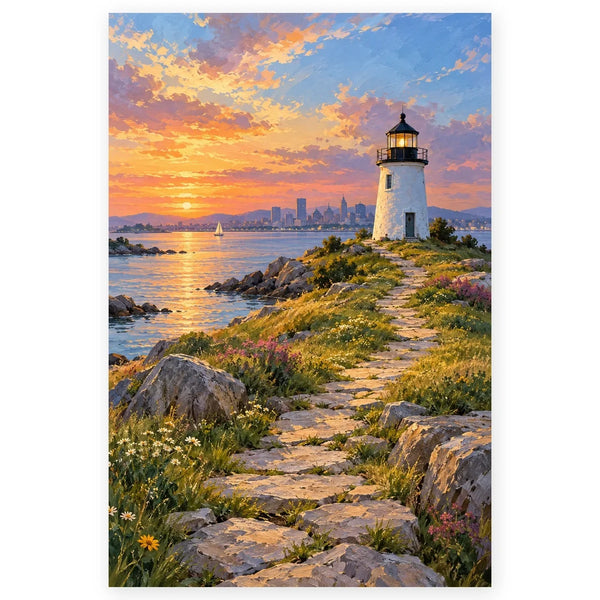
Boston Lighthouse Island Path Paint by Numbers Kit
$29.99

Copenhagen Canal Bicycle Bridge Paint by Numbers Kit
$29.99
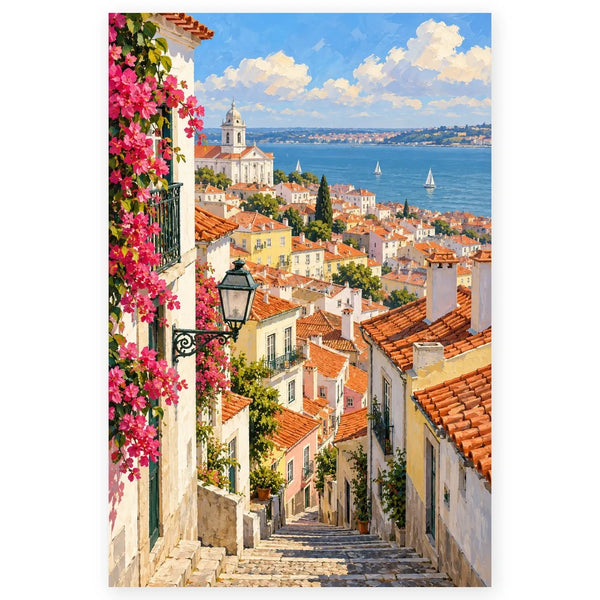
Lisbon Rooftop River View Paint by Numbers Kit
$29.99
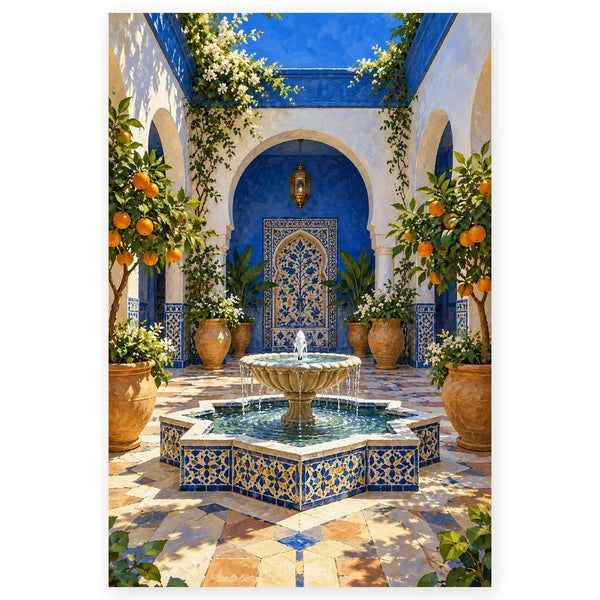
Marrakesh Blue Roof Courtyard Paint by Numbers Kit
$29.99


