Creative Craft Guides

A Creovia beginner guide
New Year Craft Reset: Finish the Kit You Already Started
A practical New Year reset for an unfinished craft kit: recover the materials, choose one active canvas, and plan short sessions without a deadline.
New Year Craft Reset: Finish the Kit You Already Started
A New Year craft reset can begin with the kit you already opened. Find its canvas, color or symbol key, and the materials you put away before the holidays. Pick one small area you can complete or make visible progress on in a short session. You do not need a new purchase, a perfect January schedule, or a promise to finish everything by the end of the month.
Diamond painting, pearl art, and paint by numbers pause in different ways, but the reset starts the same way: identify what is ready, what needs attention, and where the project can safely sit. The cover image is an editorial illustration of separate work areas and a blank planner, not a photo of a Creovia customer’s craft table. The product images below are examples of designs you might resume or start later.
Start with a ten-minute kit inventory
Put one kit on a clear surface and keep food and drinks elsewhere. Find the canvas, printed key, tools, and all packets or paint pots. If the packaging has become separated, gather it before making a plan. A project that is half finished but missing its color key is harder to restart than a barely begun kit with everything together. Label a bag or box with the project name and keep its loose pieces inside rather than borrowing parts from another kit.
Look at the surface without changing it yet. For a diamond or pearl canvas, check whether the unworked adhesive still has its original protective covering and whether loose pieces have been returned to their own packets. For a painting, check that the surface is dry, the pots are closed, and the brush is clean. If something looks damaged or unclear, stop there and use the kit instructions or the relevant troubleshooting guide. A reset is not a reason to press beads into uncertain adhesive or scrub across painted areas.
Choose one active canvas, then give the others a place
If several holiday kits are waiting, choose the one with the lowest setup friction. Ask three questions: Can I find the next section? Do I have all the materials for that section? Can I leave the surface safely when I stop? The answer may be a small diamond-painting block, a cluster of pearl-art symbols, or one numbered paint area. Put the other projects back in their own labeled storage before opening any new packets. This is a rotation plan, not a rule that you must finish one picture before touching another.
The Christmas Cottage Pearl Diamond Painting Kit illustrates why seasonal art need not expire on December 26. Its artwork shows a snowy cottage, decorated tree, and gifts. If you already started a similar pearl canvas, you can work on a small area in January simply because you still like the scene. Keep rounded pearl-style beads organized by their key; do not assume they are interchangeable with faceted diamond drills. Creovia’s pearl painting beginner guide is a useful refresher on matching symbols to beads.

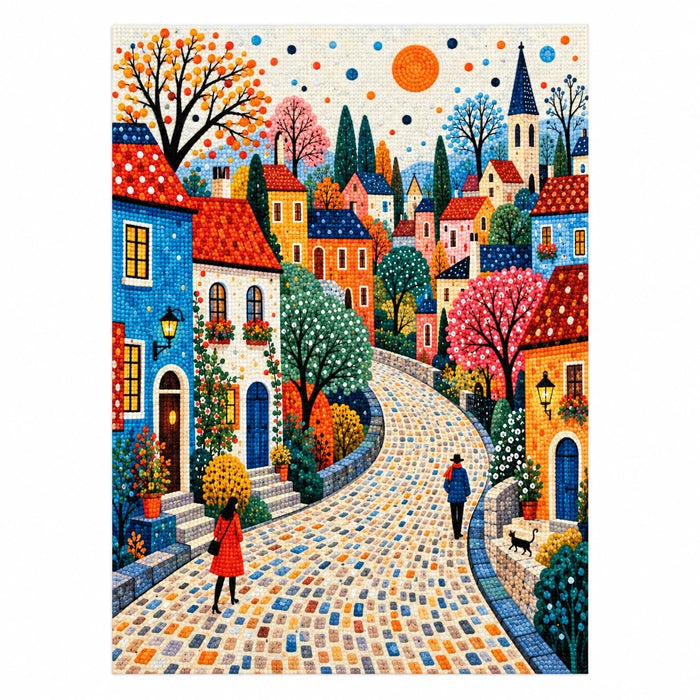
A Blossom Bookshop Diamond Painting Kit is a different example of a project you can divide into visible sections. Its pink storefront and blue doors give you landmarks for deciding where to resume. If your own diamond canvas is already open, keep its drill key and packets with it and uncover only the area you plan to work on. The diamond painting storage guide covers the surface and packet details when a pause will last longer than a day. Use that guidance for storage rather than treating a decorative product image as an instruction diagram.
Give paint by numbers its own restart check
Paint by numbers needs a different first step because the paint pots and drying surface matter. The Lavender Rows Stone Well Paint by Numbers Kit is a concrete example: it has a numbered landscape with a path, stone well, and rows of lavender. If you are resuming this or another painting, identify one area you can reach without resting your hand on wet paint. Check the chosen pot and brush before opening several colors. The current product page lists color and frame variants; the exact option selected at checkout determines the kit you receive.

Do not try to compensate for an uncertain paint condition by working faster. If a pot is dry or a painted area is not ready for another layer, close it and check the kit guidance before continuing. Keep a flat place for the canvas to dry after the session. Creovia’s paint by numbers canvas storage guide goes into the longer pause; this New Year plan is about getting started again with a manageable section.
Plan four sessions, not a completion deadline
A blank weekly page is enough. In the first session, recover the materials and complete one small section. In the second, repeat the same kind of work so you know whether the setup is comfortable. In the third, take a quick photo or mark your place on a separate note, then inspect whether the canvas and tools are still easy to put away. In the fourth, decide whether to continue, rotate to a second kit, or take a longer break. The sequence is flexible; it measures whether the routine fits your week, not how much art you produce.
For a shared household, reserve one clear tray or box per person and per kit. A partner can use the same table without using the same canvas, and the paint station should not sit where someone might tip drill or pearl packets into wet color. If you share a canvas, agree on sections and tool handoffs first; a separate two-person diamond painting guide handles that case in detail. For a personal reset, one active canvas keeps the decision smaller.
Decide what comes after the first restart
At the end of a short session, close paints, clean the brush as directed, or return beads and drills to their labeled packets. Protect unworked adhesive as the kit instructions allow and keep the key with the project. Make a note of the next specific area rather than writing “finish the whole picture.” When you sit down again, you will know what to do before opening a dozen colors or packets.
Only after you have seen how the routine fits your table should you decide whether another kit is useful. The three live product pages above show different processes and designs, but they are examples, not a required shopping list. Check current variant availability and kit contents if you do shop. The most useful New Year craft reset is one that leaves you able to return to a project next week, whether that project is a winter pearl cottage, a diamond-painted bookshop, or a lavender painting waiting for its next brushstroke.
Frequently asked questions
How do I choose which unfinished craft kit to restart in January?
Choose the kit whose canvas, key, tools, and materials are all together and whose next small section you can identify. An easy restart matters more than the number of projects waiting in a box.
Do I have to finish a Christmas pearl art design before starting a new project?
No. A Christmas design can stay enjoyable after the holiday. Protect the unfinished surface and store its beads and key together if you decide to return to it later.
What should I check before reopening paint by numbers pots?
Check that every pot is closed, labeled, and usable before putting a brush on the canvas. If a color seems dry or damaged, consult the kit guidance and avoid forcing paint across a numbered area.
Can I rotate between diamond painting, pearl art, and paint by numbers?
Yes, but give each kit its own labeled storage and keep only one canvas open on the table at a time. This reduces mixed beads, misplaced keys, and accidental contact with wet paint or adhesive.
When should I buy another craft kit for the New Year?
First check the projects and space you already have. A new kit makes sense when you want a different process or design and have a place to store it; it is not required for a fresh start.
Explore this topic
Explore related kits
Compare the current artwork and options on each product page before choosing.