Paint by Numbers Guides
A Creovia beginner guide
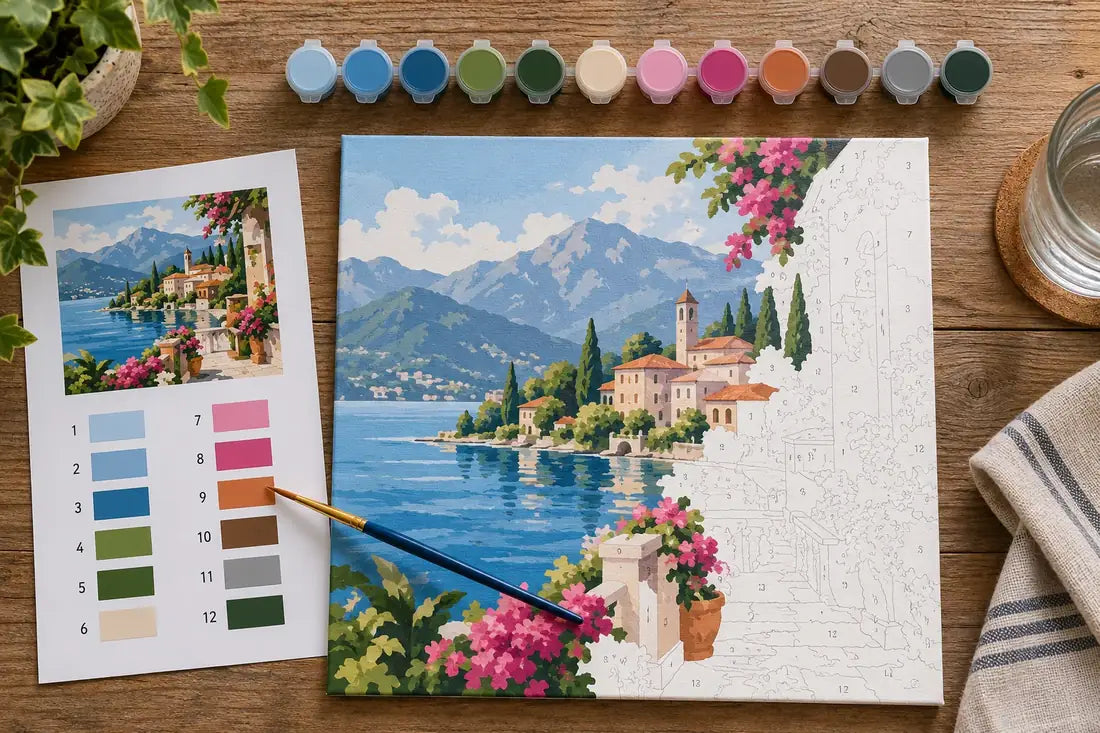
How to Read a Paint by Numbers Color Key
Learn how a paint by numbers color key connects canvas markings to paint pots, and how to keep the reference easy to follow while you work.
A paint by numbers color key is the reference that connects a marking on the canvas with the paint color assigned to that area. Reading it sounds simple, but the key may sit beside a dense image, use small print, or show several similar shades. A few minutes spent matching the reference before painting can prevent avoidable color swaps later.

Find the key, canvas marks, and paint labels
Start by locating the printed key and the number or symbol inside each outlined section. Then inspect how the paint pots are identified. Some kits use numbers, letters, or another marking system; do not assume every brand or design follows the same convention. Use the instructions and materials supplied with your specific kit to confirm how its labels correspond.
Choose one small, clearly marked section. Find that mark in the key, note the assigned color, and locate the matching label on the paint pot. Keep the canvas, key, and pot close enough that you can compare them without turning the canvas or mixing up colors. If the key is printed on a separate sheet, place it where it will not be covered by your hand or a paint container.
Confirm one match before painting a larger area
Before opening several pots, confirm one color from end to end: canvas mark, key entry, and pot label. This first match helps reveal whether you are reading the key in the correct direction and whether a symbol is a number, a letter, or a shape. If the print is small, use a bright task light or magnifier rather than guessing from a similar-looking mark.
Color itself is not always a reliable identifier. Two pots may look close in their containers, and the printed key may use a small swatch. Match the printed label first. If your kit instructions say to test a color, use the recommended test area and let it dry before comparing it with neighboring colors. Do not change an assigned color because it appears slightly different on a screen or printed reference.

Keep the key useful during a session
Work with a small set of colors at a time. Put the pots you are currently using near the relevant canvas area and return them to the same place when you pause. Close each pot according to its directions. If you move a pot away from the canvas, carry its label with it rather than relying on memory.
Some painters complete all areas of one color before switching; others finish a small region before opening another pot. Either approach can work if the labels remain easy to match. The first method reduces color changes but may require reaching across more of the canvas. The second keeps attention local but asks you to switch pots more often. Choose the method that keeps your current mark and color reference visible.
When a number is hard to read
Do not infer a mark from the surrounding artwork alone. Check the same shape elsewhere on the canvas, compare it with the key, and look for an enlarged product or instruction image if the listing provides one. A bright light can make faint print easier to see. If the mark remains unclear, pause before painting that section and contact the seller with a photo of the specific area.
Keep the color key flat and dry. If it becomes difficult to read, take a clear reference photo for your own use before moving the sheet. A phone image can enlarge small labels, but use it as a copy of the supplied key, not as a replacement for the original instructions. Avoid annotating or covering the only reference until you have a backup.
Organize color changes and pauses
Before ending a session, note the last color label you used and the section where you stopped. If you leave multiple pots open, you may have to reconstruct which color was which later. Close and return them as directed, then keep the key with the canvas. This habit is especially helpful when a design has many small regions or several shades that look similar.
For a broader checklist of what may be supplied, read what comes in a paint by numbers kit. If you are preparing a first session, the paint by numbers beginner guide covers setup and starting a manageable area. Browse the current paint by numbers collection and check the individual listing for its actual key, materials, and options.
Frequently asked questions
How do I match a paint by numbers color key to the paint pots?
Find a canvas number or symbol, locate the same mark in the key, then match its label to the pot. Confirm this sequence with your kit’s instructions because labeling systems can differ.
Should I paint one color at a time or one small area at a time?
Either method can work. Choose the one that keeps the active canvas mark and matching pot easy to identify, and return colors to their labeled place when you switch.
What if I cannot read a number on the canvas?
Check the same mark elsewhere, improve the light, and compare it with the supplied key. Pause before painting if the match remains uncertain; do not guess from the image alone.
Can I use a phone photo of the color key?
A clear photo can enlarge small print for reference, but keep the original key and follow the kit instructions. The photo should copy the supplied information rather than substitute an assumed color.
Why do two paint pots look almost the same?
Similar-looking shades can be hard to distinguish in a small pot or under certain lighting. Use the printed labels and key rather than judging by appearance alone.
Find your next project
Explore paint by numbers kits.

Custom Paint by Numbers Kit From Your Photo
$34.99

Singer at a Coastal Amphitheater Paint by Numbers Kit
$29.99

Woman Hiker in a Red Scarf Paint by Numbers Kit
$29.99

Man Reading in an Armchair with a Spaniel Paint by Numbers Kit
$29.99

Potter Shaping a Bowl in a Studio Paint by Numbers Kit
$29.99

Ballerina Practicing in a Studio Paint by Numbers Kit
$29.99

Pear Tree Garden Tea Portrait Paint by Numbers Kit
$29.99