Diamond Painting Guides

A Creovia beginner guide
Why Are My Diamond Painting Drills Upside Down in the Tray?
Learn how to settle drills face up, reduce piling, and choose a tray setup that keeps colors organized.
If diamond painting drills keep landing upside down in the tray, start with fewer pieces and a gentle, level movement. The raised faceted side should face up for a standard wax pen; the flat back goes against the canvas. You do not need a perfect tray of face-up drills before you start—use the correctly oriented pieces first, then settle the rest again.
Check which side is facing you
Look closely at a few loose drills under comfortable light. The side with the cut facets is normally the side touched by the pickup pen. The flat underside is the side placed onto the sticky canvas. A drill lying on its edge can be mistaken for a face-down piece, so look for its full surface before trying to pick it up.
Round drills can roll more easily than square ones, while square drills also need the correct orientation. The tray’s grooves help arrange pieces, but the exact result depends on the shape of the drills and the tray. Expect a few pieces to remain sideways or face down after a shake.
Keep the tray next to the labeled packet or container for the color you are using. If you are unsure which color is in the tray, identify it from the label and chart before returning it. Two similar shades can look nearly identical under a lamp.
Try a small amount and a gentle shake
- Set the tray on a stable, clean surface with the pouring opening positioned so drills cannot escape.
- Pour a small working amount of one labeled color into the grooved section. Close the source container and leave its label visible.
- Hold the tray level and use a short, gentle side-to-side motion. Stop and check rather than shaking continuously.
- Use the pieces whose faceted tops are visible. If there is a pile, return a little of that color to its own container and try again.
- When you have used most of the face-up pieces, gently settle the remaining drills again.
A shallow layer gives the pieces space to move. A crowded tray can leave drills stacked on top of each other instead of resting in the grooves. If a few do not cooperate, that is not a reason to keep shaking until the whole tray is empty or the pieces spill.

Look for the cause before changing tools
Drills are stacked: reduce the quantity first. Tilt the tray gently toward its pouring edge and return the excess to the original labeled container. Keep the stopper in place while shaking if the tray has one and the instructions call for it.
Drills cling to the tray or packet: static may be part of the problem. Check whether pieces cling even when the tray is clean and only lightly filled. Our guide to static diamond painting drills covers ways to diagnose that issue. Do not add liquids or household products to the tray without checking the accessory’s care instructions.
Drills are sideways in a groove: work from the pieces already lying flat. A gentle adjustment may help, but avoid poking sharply at the grooves or pressing down on the drills. If a piece looks damaged, set it aside in a labeled place instead of forcing it into a row.
The tray moves while you shake it: clear enough desk space to hold it level and keep the canvas away from the pouring opening. An unstable or sloped surface can send pieces into one corner before they have a chance to settle.
Choose a tray that suits the way you work
A grooved tray gives loose drills a place to settle into lines, but the tray does not identify their color or automatically orient every piece. If you work with one color at a time, an easy-to-hold tray may be enough. If you switch among several colors, separate labeled compartments can help you keep them apart.
Creovia’s Multi-Function Diamond Painting Drill Tray Set has grooved trays, modular compartments and sliding lids. The listing says it works with round and square drills. Keep each active color identified even when it has its own compartment, and check that the lid is clear of loose drills before closing it.
The Candy Cane Diamond Painting Drill Tray & Pen listing offers pink and red trays as well as separate pen variants. The tray option has a grooved area, side compartments, a removable lid and stopper. Select a tray variant if you need the tray; the pen and tray are sold separately. Neither accessory guarantees that every drill will land face up.

For a broader comparison of tray layouts and features, read how to choose a diamond painting drill tray. Select the accessory for the number of colors and available workspace you actually use, rather than assuming a larger tray is always easier.
Reset when you change colors
When you finish a color, return its loose drills to the matching labeled packet or container. Inspect the grooves, corners, compartments, and stopper area before opening another shade. The between-color tray cleaning guide explains a gentle dry reset.
If a few drills have already mixed with another color, keep them separate until you can identify them from the kit’s labels. Avoid guessing from color alone. A clear one-color-at-a-time routine makes the next tray shake easier and keeps the canvas chart reliable.
Frequently asked questions
Which side of a diamond painting drill should face up in the tray?
The raised, faceted side should face up for pickup with a standard wax pen. The flat back is the side that normally contacts the canvas adhesive.
Do I need every drill to face up before I start?
No. Pick from the correctly oriented drills first, then settle the remaining pieces again. A few face-down pieces do not mean the tray is faulty.
Why do drills pile up instead of lining up in the tray?
Too many drills, a steep tilt, or a vigorous shake can leave pieces piled together. Return some to the labeled container and try a shallow layer on a level surface.
Can static make diamond painting drills hard to arrange?
Static can cause loose pieces to cling to the tray or packaging. If they cling after you reduce the quantity and gently settle the tray, check the tray instructions and use a method suitable for that material.
Should I use tweezers to turn every upside-down drill?
You can use compatible tweezers for a few stubborn pieces if your kit permits, but you do not need to turn the whole tray individually. Work with the face-up pieces first.
Find your next project
Explore diamond painting kits.

Colorful Village Street Diamond Painting Kit
$23.99

Tropical Hibiscus Queen Diamond Painting Kit
$23.99

Santa Hug Reindeer Diamond Painting Kit Christmas
$23.99

Little Bookshop Garden Diamond Painting Kit
$23.99

Parisian Patisserie Diamond Painting Kit
$23.99

Blue Hydrangea Village Diamond Painting Kit
$23.99

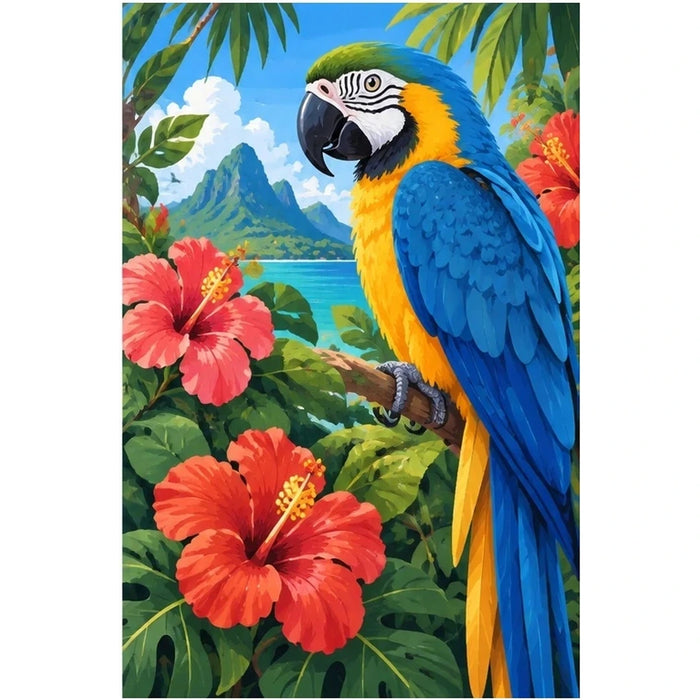
Tropical Macaw Hibiscus Diamond Painting Kit
$23.99