Diamond Painting Guides
A Creovia beginner guide
Mixed Up Diamond Painting Drills? How to Sort Colors Without Guessing
Keep a mixed batch separate, recover reliable color references, and decide which drills can be sorted confidently before returning them to your can...
You finish a section, tip the remaining drills out of the tray, and realize they have gone into the wrong container. The useful first move is to stop pouring. Do not try to fix the mistake by dividing the pile into two roughly equal portions. Keep the mixed batch separate while you work out which colors were involved and whether you still have reliable samples.
This guide deals with loose drills that have become mixed before placement. If the wrong drills are already on the canvas, use the misplaced-drill removal guide after identifying the correct color. Sorting and removal are separate jobs; doing both at once makes it easier to lose track.
Contain the mixture before reconstructing it
Put the affected container on a clean, stable surface away from open bags. Close every unaffected color. If drills spilled across the table, collect them into a separate temporary container rather than returning them to whichever bag looks closest. Keep any collected dust or debris out of the usable supply.
Write down what you know while the sequence is fresh: the project, the symbol you were using, the bag you intended to open, and the container that received the leftovers. Distinguish a confirmed fact from a guess. “I poured color A into color B” is different from “I think these are the two pinks.”
Do not change the original labels yet. A wrong label can still be evidence of how the mix-up happened. Photograph the containers and their positions before rearranging them if that helps preserve the sequence.
Look for references that have not been mixed
The best comparison is a clearly identified supply from the same project that you know stayed separate. Check unopened packets, a second packet with the same confirmed code, or a small portion left in a labeled tray. Match that reference to the project's key before treating it as reliable.
An already placed section may help only if you are confident it was filled correctly. The printed color beneath an empty symbol is not a dependable substitute for a physical drill sample. Nor is the picture on your phone a precise color reference: it can help you locate the part of the design, but it does not establish which loose drill belongs there.

Keep the reference samples physically separate from the mixture. Use a small card or compartment for each one and copy the verified identifier beside it. If you cannot establish even one reference, you have an identification problem, not just a sorting job. That is a reason to pause before placing more drills.
Try a small sorting test
- Spread a modest amount of the mixture in a shallow tray so the drills are not hiding under one another.
- Place the verified samples nearby under the same light.
- Move only the pieces you can identify confidently into their assigned containers.
- Leave doubtful pieces in a third, clearly separate group.
- Compare the sorted groups with the references again before pouring them back.
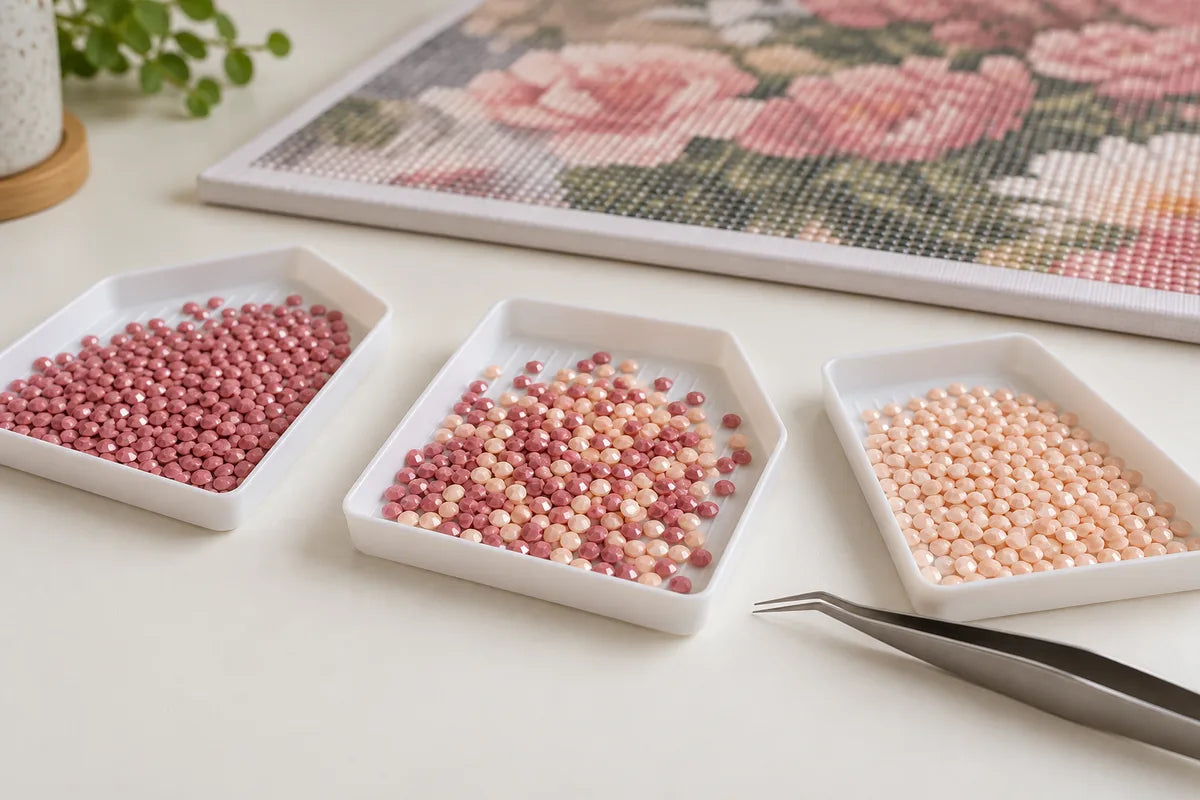
A clean white or neutral surface can make the comparison easier to follow. Adjust the light to reduce hard reflections, and turn the tray rather than judging a drill by one bright facet. Do not add water, cleaner, powder, or another substance to make a color look different. This is a visual sorting task, not a treatment of the drills.
If you use tweezers, work slowly over the tray so an escaping piece stays contained. You can also use the placement tool you already handle comfortably. The aim is reliable separation, not moving the greatest number of drills in one pass.
When a tray helps—and when it does not
The Multi-Function Diamond Painting Drill Tray Set is listed with modular compartments, sliding lids, and a grooved surface for round or square drills. Separate compartments can give identified and uncertain groups their own places. They cannot identify a color or automatically separate two similar shades.
You do not need to buy a new organizer before trying the small test. Use clean containers that stay stable and accept readable labels. If you decide a divided tray suits your routine, check its dimensions and configuration on the product page, or compare the considerations in our drill tray guide.
Stop when the distinction is no longer reliable
Two shades may be obvious in a large group yet difficult to separate one drill at a time. If your decisions change every time you look, do not return the uncertain group to a verified bag. Seal it separately with the project identifier and a note that the color is unresolved.

A matching printed code from a different project does not guarantee an identical physical shade. As one supplier explains in its dye-lot policy, drills carrying the same code can differ across suppliers or batches. That is a reason to preserve your project's original supplies, not a diagnosis of any particular Creovia kit.
If replacement or identification help is needed, contact the seller with the order details, artwork name, canvas key, affected labels, and clear photographs. Ask what can be confirmed for your specific kit. Do not assume a free replacement policy, an exact match from a photograph, or a universal code system.
Resume with a clean boundary between known and unknown
Continue only with a color you have confirmed. Before placing it, trace the match from container label to chart entry to canvas symbol. Keep the uncertain mixture off the active work surface so you cannot pick it up automatically when returning from a break.
If the remaining verified supply is limited, note where you stopped and resolve that color before committing to a large new area. Guessing to finish one small section can create a second problem: you may later have to identify and remove those drills as well.
Change the step that caused the mix-up
If you poured into the wrong bag, close the active bag before opening the next one and read its identifier again before returning leftovers. If neighboring containers tipped together, increase the space between them or keep only one open. If two projects shared an organizer, add the project name to each label instead of using a color number alone.
The drill organization guide covers the ongoing system. After an accident, one change at the point where it happened is more useful than rebuilding your entire workspace. Keep the confirmed colors, the uncertain mixture, and the original key separate until the project is complete.
Frequently asked questions
Can I use mixed diamond painting drills if the two shades look almost identical?
Only if you deliberately accept a changed result. Similar appearance does not confirm that the colors are interchangeable. For a result that follows the chart, keep uncertain drills separate and identify the correct color before placing them.
How do I sort two similar drill colors?
Use reliable samples from the same project, spread a small amount under consistent light, and move only clearly identified drills into labeled containers. Keep doubtful pieces in a third group instead of forcing every drill into one of the two colors.
Can I identify drills from the printed canvas background?
Do not use the background color alone as an exact match. Use the project's key and confirmed drill supplies. The printed image and the physical drills serve different purposes and may not look identical.
Will a grooved diamond painting tray separate mixed colors?
No. A grooved tray helps arrange drills for handling, while separate compartments can hold identified groups. The tray does not determine which shade or chart code a drill belongs to.
What information should I send if I cannot identify the mixed drills?
Send the seller your order details, artwork name, a photo of the canvas key, the affected packet or container labels, and clear photos of the mixture. Explain what was mixed and which references remain reliable.
Explore this topic
A kit to explore
Compare the current artwork and options on each product page before choosing.

Multi-Function Diamond Painting Drill Tray Set
$23.99
Keep your diamond painting drills organized, aligned, and ready to place with this modular multi-function tray set. Modular compartments for sorting multiple colors Stackable storage with sliding lids Grooved tray...
Find your next project
Explore diamond painting kits.

Colorful Village Street Diamond Painting Kit
$23.99

Santa Hug Reindeer Diamond Painting Kit Christmas
$23.99

Tropical Hibiscus Queen Diamond Painting Kit
$23.99

Tropical Macaw Hibiscus Diamond Painting Kit
$23.99

Pink Dragon Cherry Blossom Pagoda Diamond Painting Kit
$23.99

Blue Hydrangea Village Diamond Painting Kit
$23.99

Ragdoll Cat Rose Window Diamond Painting Kit
$23.99